
From Fear to Connection: How Horses Opened My Heart
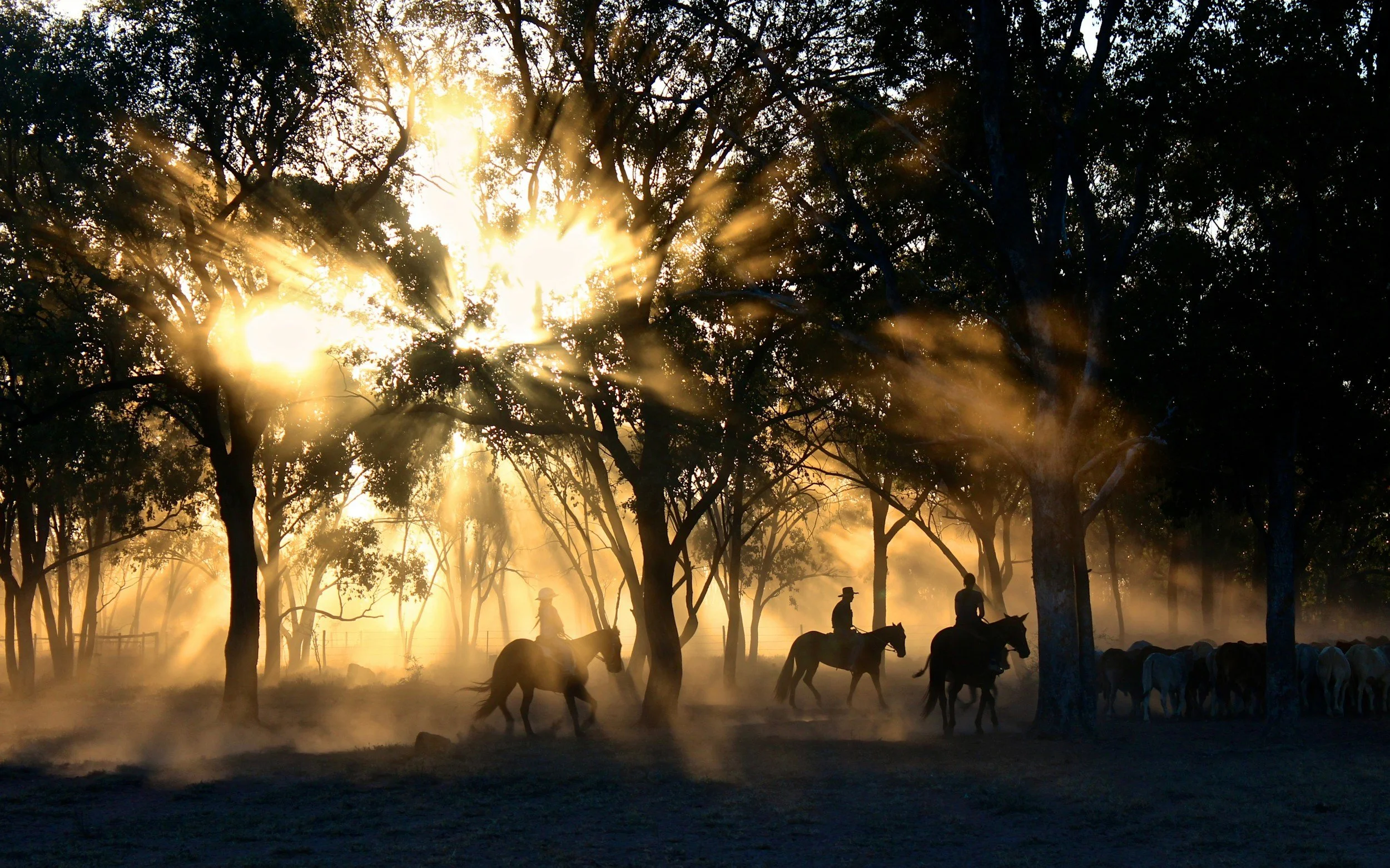
There is something about standing beside a horse that is difficult to put into words.
They are powerful, sensitive, incredibly present animals. They seem to notice things we may not even realize we are carrying—tension in our bodies, changes in our breathing, hesitation, fear, and moments when we finally begin to soften.
What makes this especially meaningful to me is that I used to be scared of horses.
For a long time, their size and power intimidated me. Being close to a horse didn’t automatically feel peaceful or therapeutic. In fact, it brought up a deep sense of not being in control—something that was uncomfortable for me. Being around horses required me to trust, to soften, and to let go of some of that need for control. Trust wasn’t something that necessarily came easily to me, which made the journey with horses even more meaningful.
About two years ago, I asked my husband for horseback riding lessons for Christmas. I knew I was intimidated by these beautiful creatures, but something in me also felt drawn to them. A good friend of mine was planning to open a horse retreat in the future, and I wanted to be ready to help, participate, and fully experience the retreat when that time came.
Around the same time, I was also deepening my training in animal communication, which often gave me opportunities to connect with horses. Through those experiences, I began to realize just how much wisdom, sensitivity, and healing horses can bring into our lives. The more I connected with them, the more I understood that building a relationship with a horse could become part of my own healing journey.
What began as learning how to be around horses became something much deeper. As I spent more time with them, learned their cues, cared for them, and became more comfortable in their presence, I noticed something changing within me.
My heart began to open.
And with that opening came a deeper level of healing.
Horses Invite Us Into the Present Moment
Horses live through an incredible awareness of their environment. As prey animals, they are highly sensitive to movement, posture, energy, and changes around them. Once I started taking lessons, my beautiful teacher invited me into this knowledge as well noticing how I was feeling with my horse.
When we are with a horse, we are invited to become more aware too.
Am I holding my breath?
Are my shoulders tense?
Am I rushing?
Am I actually present in my body?
A horse doesn’t need us to explain everything we are feeling. Sometimes simply being beside one gives us an opportunity to slow down, notice what is happening inside ourselves, and begin to regulate.
That can be incredibly powerful.
The Heart, the Nervous System, and Connection
Our bodies are constantly communicating through electrical activity. The heart, brain, muscles, and nervous system all depend on electrical signals, and the heart’s electrical activity produces a measurable magnetic field.
Horses also have powerful cardiovascular systems, and being around a calm horse provides strong sensory rhythms: the sound and rhythm of breathing, movement, warmth, touch, and heartbeat.
And that was what I started to notice myself, I started to see my nervous system calming down, I started losing track of time and I was just present that that moment with my horse.
There is growing interest in how human physiology responds during interactions with horses. It seems as if a horse’s magnetic field automatically “syncs” or heals the human nervous system. Research into human-animal interaction suggests that positive, safe interactions with animals can be associated with changes related to stress and autonomic nervous-system regulation.
For me, the experience is simple: when I got comfortable with not being in control and trusting something that was bigger than I, I opened myself to a deeper healing that I didn’t know I needed it. I learned to trust again. I saw my body:
Breathing deeper.
Muscles soften.
The heart settle.
The mind quieter.
These are all qualities associated with greater parasympathetic nervous-system activity—the part of our autonomic nervous system involved in rest, restoration, digestion, and recovery.
Instead of always living in go, go, go, the body gets an opportunity to experience something different:
You can be here. You can slow down. You can connect.
Sometimes Healing Begins With What Scares Us
Perhaps one of the most meaningful parts of my relationship with horses is remembering where I started.
I was afraid.
And I didn’t overcome that fear by forcing myself to pretend it wasn’t there. I learned slowly. I took lessons, developed new skills, and began to understand how horses communicate. I learned to respect their boundaries—and, in the process, became more aware of my own.
I also began to recognize just how sensitive horses are to what we bring into their presence. They seemed to notice my energy, my body language, and the emotions I was carrying. They saw me, felt my presence, and responded to me without judgment or criticism. They didn’t need me to explain myself or be anything other than who I was in that moment.
They simply met me where I was and stayed present with me. And there was something incredibly healing about being seen and accepted in that way.
Trust grew through experience.
And somewhere along the way, something shifted.
The animal that once activated fear in me became an animal that helped me experience presence, connection, confidence, and a deeper opening of my heart.
That has taught me something important about healing.
Healing isn’t always about getting rid of uncomfortable feelings. Sometimes, it’s about creating enough safety within ourselves to stay present while those feelings move through us. As a therapist, this is at the heart of the work I believe in—the integration of our emotions rather than the avoidance of them. It’s about allowing ourselves to feel what we feel with curiosity and compassion, recognizing that every emotion is part of our story. It’s the understanding that I am human, having a human experience, and that I don’t have to push away the difficult parts of that experience in order to heal..
Horses Don’t Ask Us to Have It All Together
One of the things I love most about horses is that they don’t care about our titles, accomplishments, mistakes, or the story we tell the rest of the world or ourselves.
They meet what is happening right now.
That kind of relationship can invite authenticity.
You don’t have to find the perfect words.
You don’t have to explain everything.
Sometimes you simply stand beside a horse, breathe, notice the ground beneath your feet, and allow yourself to be present.
And sometimes, in that quiet space, something inside begins to change.
For me, horses became part of a journey I never expected.
I started out afraid of them.
I began taking lessons.
I learned to trust.
My heart opened.
And a deeper healing began.
Today, when I spend time with horses, I am reminded that healing doesn’t always happen through words. Sometimes it happens through relationship, rhythm, movement, presence, and connection.
Sometimes healing looks like standing beside a thousand-pound animal, placing your hand against their warm body, taking a slower breath, and realizing that your own body is beginning to soften too.
Sometimes the greatest teachers don’t speak at all. They simply create a space where our hearts can remember how to listen.
Gratitude Changes the Relationship
As my relationship with horses has deepened, so has my gratitude for them.
I am grateful for their patience.
I am grateful for their sensitivity.
I am grateful for what they teach us about boundaries, trust, communication, and presence.
I am grateful for the way they can stand beside us without asking us to explain ourselves.
And I am grateful for their willingness to enter into partnership with human beings.
But gratitude cannot only be something we feel.
Gratitude also asks something of us.
If we are going to receive the gifts horses offer, then we have a responsibility to consider what we are giving them in return.
Partnership Goes Both Ways
A horse should never simply be viewed as a tool for human healing.
They are living, feeling beings with physical, social, and behavioral needs of their own.
True partnership means asking not only, “What can this horse do for me?” but also:
“What can I do to give this horse a good life?”
Being a good steward means providing appropriate food, clean water, shelter, veterinary and hoof care, safe movement, companionship, rest, enrichment, and humane training and handling.
It also means learning to listen when a horse communicates discomfort, fear, fatigue, or the need for space.
Just as horses can teach us about boundaries, we need to honor theirs.
Keeping Horses Safe Throughout Their Lives
Our responsibility does not disappear when a horse gets older, can no longer perform a certain job, develops additional care needs, or is no longer useful to us in the way they once were.
This is where stewardship becomes especially important.
Horses can become vulnerable when they are repeatedly sold or passed along without careful consideration of where they will end up. Responsible ownership means thinking about the horse’s future and doing everything reasonably possible to keep them from entering unsafe or uncertain situations sometimes described as the horse pipeline.
That can mean planning ahead, carefully screening future homes, supporting reputable rescues and sanctuaries, considering retirement needs, and understanding that bringing a horse into our lives creates a responsibility that extends beyond what that horse can provide for us.
Our gratitude should show up in our choices.
If horses help carry us through seasons of healing, we should also be willing to help carry them through the seasons when they need us.
Becoming Good Stewards of the Horses Who Give Us So Much
Maybe this is one of the greatest lessons horses have to teach us:
Healing is reciprocal.
Relationship is reciprocal.
Love is reciprocal.
The horse-human relationship is not simply about what happens to us when we stand beside a horse. It is also about who we become because of that relationship.
Do we become gentler?
More aware?
More responsible?
More willing to protect?
More grateful?
To me, being a good steward means honoring the whole life of the horse—not only the years when they can ride, work, compete, teach, or participate in therapeutic programs.
It means recognizing their inherent value simply because they are alive.
A Different Kind of Thank You
Sometimes gratitude is spoken.
Sometimes gratitude is felt.
But sometimes gratitude looks like a clean stall, an open pasture, fresh water, good food, companionship, appropriate medical care, gentle hands, and a safe place to grow old.
Sometimes gratitude means paying attention when a horse tells us they have had enough.
Sometimes gratitude means protecting an animal who has spent years giving so much to humans.
And sometimes the most meaningful way we can say thank you to a horse is by making sure their life is filled with the same safety, dignity, connection, and compassion that they have helped awaken within us.
I started this journey afraid of horses.
Then I began taking lessons.
I learned to trust.
My heart opened.
And a deeper healing began.
Now, alongside that healing, there is gratitude.
Gratitude for the horses who teach us.
Gratitude for the horses who carry us.
Gratitude for the horses who stand quietly beside us while we learn to find ourselves again.
And with that gratitude comes a promise:
May we not only ask horses to help heal our hearts. May our healed hearts help us create a better world for them.
Because perhaps the greatest way to honor the healing horses offer us is to become people worthy of their trust—good stewards who protect them, listen to them, care for them, and ensure that the partnership between horse and human is truly a partnership for life.
With a Grateful Heart
As I reflect on this journey, I know I didn’t get here alone. There have been so many people—and horses—who have supported me, encouraged me, taught me, and helped create the space for this healing to unfold. I am deeply grateful to Freddie, Danielle, Bret, Fran, Katie, Lacey, and Paisley for each of the ways you have been part of this journey.
And most of all, to Beach Boy and sweet Lily—thank you. Thank you for your patience, your presence, your lessons, and the ways you have helped me learn to trust, soften, and open my heart. You have shown me that some of our greatest teachers come into our lives without words. What began as a journey to become more comfortable around horses became something I never could have anticipated: a journey toward a deeper connection with myself.
To every person and every horse who has walked alongside me, thank you for helping make this journey possible. I will carry what you have taught me—and the gratitude I feel for you—with me always.
